The main sign of AC pulley issues is the air conditioner not cooling. Also, you might notice a few other things, like burning smells, odd noises, electrical problems in the car, etc.
A belt called the serpentine belt spins the AC pulley, which is attached to the AC compressor. When the pulley spins, it makes the compressor work; the AC compressor is the air conditioner's heart, so if it fails, the AC won't work. Typically, whenever the pulley or serpentine belt has a problem, it'll cause problems for the AC compressor.
- Key function: The pulley's key function is to transfer power. It rotates through the serpentine belt while the vehicle is running, generating rotational power. Consequently, power goes to the AC compressor, feeding the entire system and making the air conditioner work.
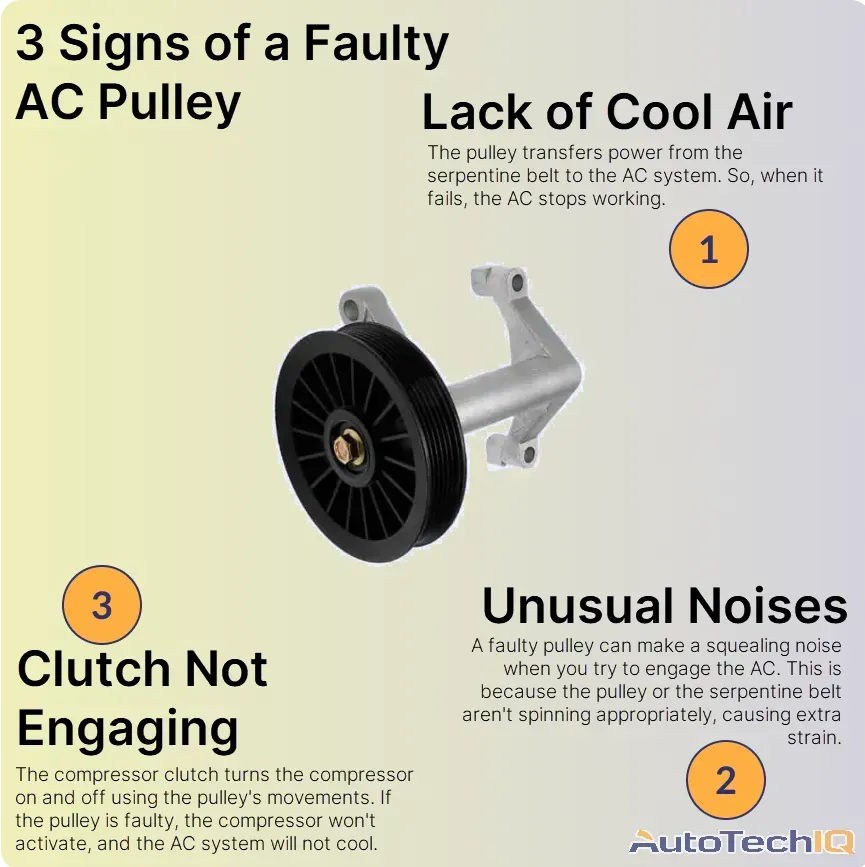
A faulty AC pulley won't transfer power to the compressor, and the air conditioner won't work.
- Safety: Air conditioners have a vital feature that helps drivers see during cold weather when the windshield gets foggy or frozen, the defrost. Therefore, a malfunctioning AC won't help drivers with a foggy windshield, leaving them with bad visibility. Additionally, a faulty AC pulley can cause issues in the serpentine belt, resulting in numerous electrical failures, a faulty power steering pump, water pump issues, engine overheating, etc.
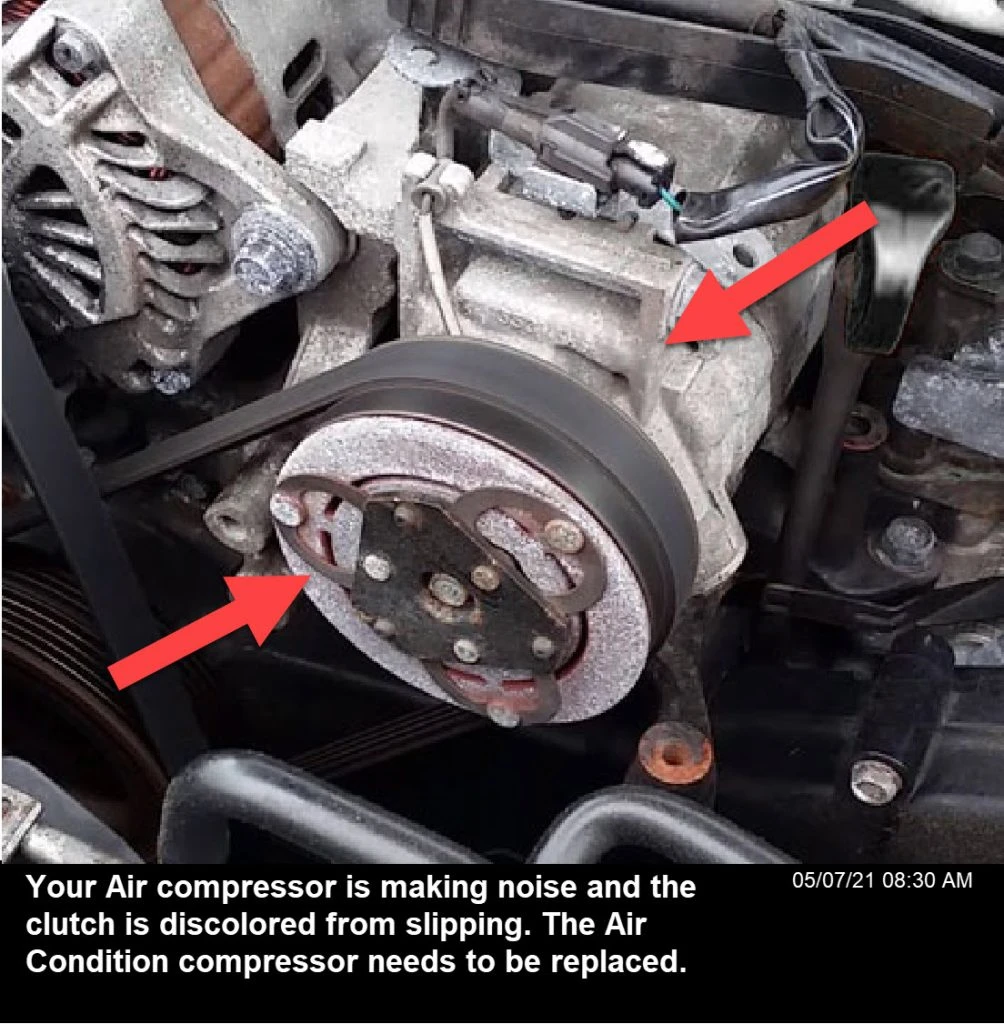
AC not cooling
Since the air conditioning pulley is rotating and powering the entire AC system, if it fails, the power stops. If the AC system stops receiving power, it stops cooling.
Inside the vehicle's cabin, the temperature won't lower. The AC unit will be unresponsive, and components won't work due to no power.
Alternatively, depending on damage, the pulley might transfer power, but below what's needed for the AC to work properly. In this case, the cooling efficiency is compromised and won't lower the temperature noticeably.
Burning rubber smell
An issue in the AC pulley can also mean issues in the serpentine belt and compressor clutch, which involve rubber material. For example, the serpentine belt might have slipped out of place, damaging the pulley. In this case, the belt can flap under the hood and rub against hot engine components, melting and causing a burning rubber smell.
Alternatively, the pulley itself can develop an overheating problem, transferring too much heat to the compressor clutch. The clutch can start to melt over extreme temperatures and release a burning rubber smell.
Other signs
Here are some other signs that a faulty AC pulley can show:
- Grinding noises
- Intermittent AC
- Vibrations
- Electrical issues
- Squealing when engaging the AC
Possible fixes
- AC control unit replacement: If the AC pulley fails, it can cause the AC compressor to malfunction, disrupting the regulation of the refrigerant and causing the AC control unit to fail, requiring replacement.
- HVAC control replacement: A faulty AC pulley can lead to the AC compressor failing, resulting in poor refrigerant circulation. This can prevent the HVAC control system from maintaining the desired temperature, necessitating its replacement.
- AC compressor replacement: When the AC pulley is damaged, it can prevent the AC compressor from circulating refrigerant properly, causing the compressor to overheat and seize, leading to the need to replace the entire compressor.
- AC condenser replacement: A failing AC pulley can cause the AC compressor to malfunction, leading to incorrect refrigerant flow. This can cause the AC condenser to overheat and become damaged, thus requiring replacement.
- AC control module replacement: If the AC pulley fails, it can result in the AC compressor malfunctioning, causing inaccurate refrigerant regulation and leading to the AC control module failing and needing replacement.
- AC pressure switch replacement: A malfunctioning AC pulley can cause the AC compressor to provide incorrect pressure readings, leading to the AC pressure switch failing and necessitating its replacement.
- AC hose replacement: A damaged AC compressor can create excessive pressure or cause refrigerant leaks, which may damage the AC hoses and require replacement to ensure the system can hold refrigerant properly.
- Serpentine Belt Replacement: A damaged AC pulley can lead to excessive pressure or refrigerant leaks due to a malfunctioning AC compressor. This can damage the AC hoses, requiring replacement to ensure the system holds refrigerant properly.
Frequently Asked Questions
Can you drive with a bad AC compressor pulley?
In a pinch, you might be able to drive with a bad AC compressor clutch pulley, especially if it's not seized and spins freely. However, it's risky. A broken pulley can damage the belt, expansion valve, clutch coil, pulley bearing, potentially leading to overheating or even seizing the compressor itself, causing a cascade of expensive repairs. It's best to get it checked by a mechanic as soon as possible.
Can you bypass the AC pulley?
Bypassing the AC pulley is possible in some cars, typically by installing a special bypass pulley or using a shorter belt. This lets the engine run without engaging the AC compressor. However, it's a temporary solution at best. While it can restore some lost engine power and free you from belt worries, it completely disables your air conditioning and might cause warning lights. Consulting a mechanic for a proper air conditioning system repair is the safer and more long-term solution.
Why is my AC compressor pulley squealing?
The squeal from a bad compressor pulley likely points to a slipping issue caused by either a worn or loose belt or a failing component within the pulley itself. A worn belt loses grip, while a loose belt needs tightening. The pulley's bearing might be failing due to age or lack of lubrication, causing friction and noise. In some cases, the compressor clutch itself could be malfunctioning.